About the Journal
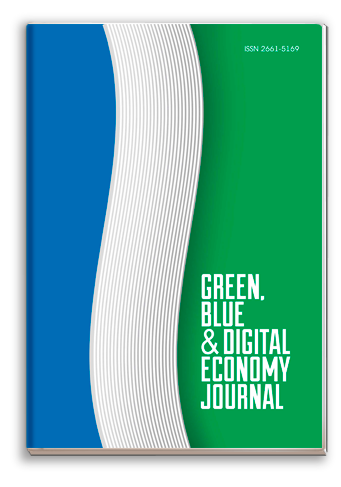
ISSN (Print): 2661-5169
ISSN (Online): 2661-5282
DOI: https://doi.org/10.30525/2661-5169
The journal "Green, Blue and Digital Economy Journal" publishes scientific researches on economic analysis related to the use of natural resources, the solution of environmental and economic problems. The last decade has been characterized by numerous economic crises and the development of global environmental problems. In response to the negative effects of economic development on the environment, as well as the financial crisis, the international community is looking for solutions to develop a sustainable economy and society. In this context, concepts such as "green economy", "blue economy" and "digital economy" have emerged and become more widespread at the international level. Integration between them leads to new paradigms and creates opportunities for recovery of the economic processes. The "green economy" is based on practical and theoretical knowledge related to climate change and environmental policy development. In turn, the "blue economy" becomes an alternative development paradigm, which combines the economic use of the oceans with environmental sustainability.
Climate change and the digital economy are fundamental processes that affect the relationship among people, countries, societies, which require a rapid response by politicians and the scientific community. The main objective of the journal is the publication of conceptual scientific researches aimed at solving global environmental and economic problems of humanity. It is published in English with quarterly frequency, in Riga (Latvia).